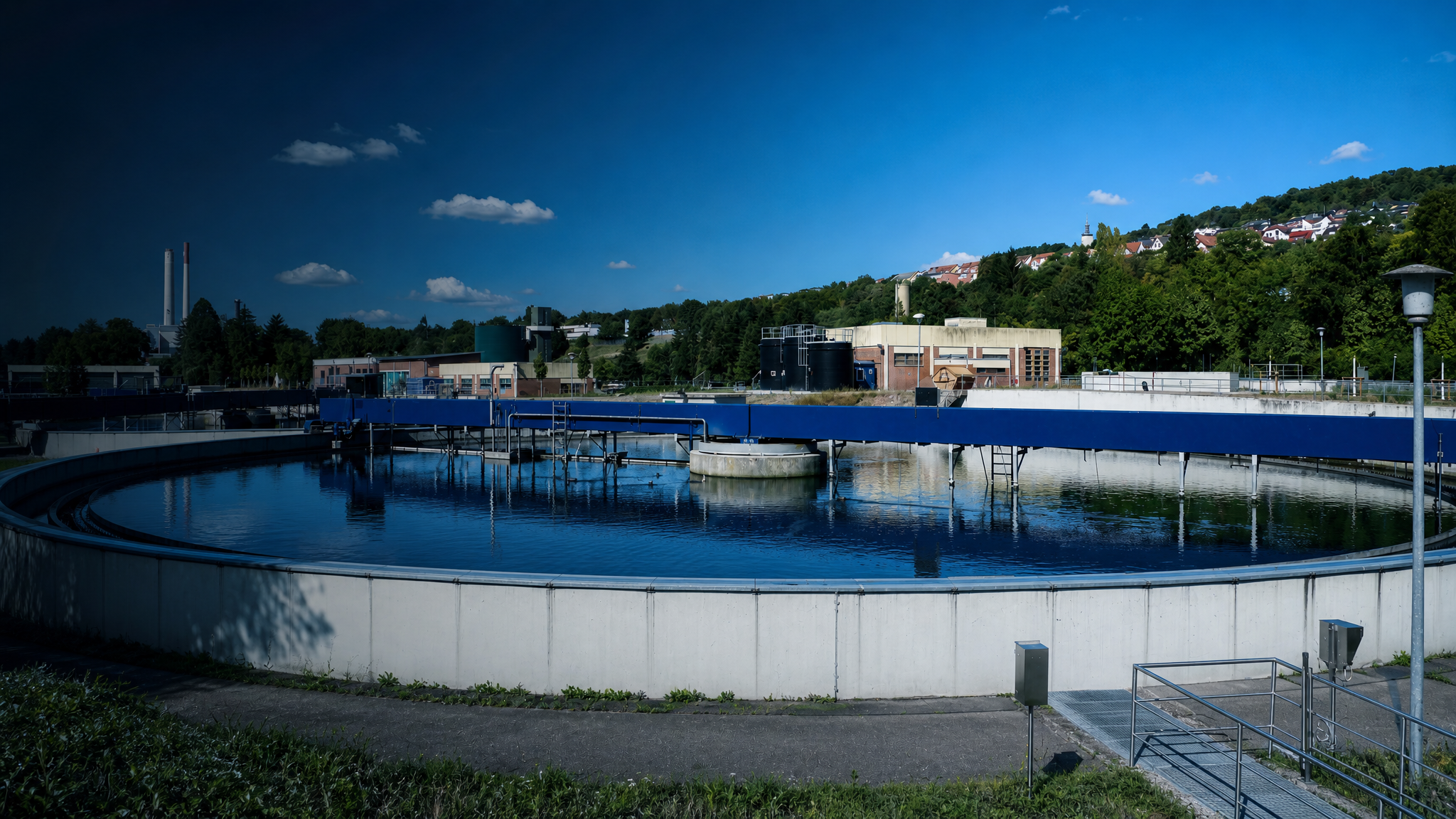
Disinfection for Tertiary Wastewater Treatment
Reducing pathogens in secondary or filtered effluent — UV, ozone, chlorination and peracetic acid compared.
Disinfection is the tertiary treatment step that reduces bacteria, viruses and other pathogens in treated wastewater before it is discharged to sensitive waters or reused. The four established methods are UV irradiation, ozone, chlorination (and dechlorination) and peracetic acid (PAA). There is no single best option: UV is the most common choice for discharge because it leaves no chemical residual, ozone also breaks down some micropollutants, chlorination is low-cost but needs residual management, and PAA is a flexible liquid dose that is easy to retrofit. Disinfection performance depends heavily on upstream clarity — the lower the suspended solids, the more effective and economical every method becomes, which is why disinfection almost always sits downstream of a filtration stage.
Key Numbers
Technology Profiles
UV Disinfection
highUltraviolet light inactivates bacteria and viruses by damaging their DNA as effluent flows past UV lamps in an open channel or closed vessel. The most common choice for discharge.
- No chemical residual — safe for discharge
- Compact, fast contact time
- Effective against a broad range of pathogens
- Simple to operate and retrofit
- Performance drops sharply with high turbidity
- No residual protection downstream
- Lamp cleaning and replacement required
- Energy use scales with flow and dose
Ozone
mediumOzone gas is a powerful oxidant that inactivates pathogens and simultaneously breaks down some micropollutants, colour and odour. Generated on site from oxygen or air.
- Very strong, fast disinfection
- Also oxidises some micropollutants and colour
- No persistent chemical residual
- Improves effluent clarity
- Highest energy demand of the four methods
- On-site generation adds complexity
- Can form bromate in bromide-rich waters
- Higher capital cost
Chlorination / Dechlorination
mediumDosing chlorine (as gas, hypochlorite or tablets) into a contact tank, usually followed by dechlorination to remove residual chlorine before discharge. The lowest capital-cost option.
- Lowest capital cost
- Provides a measurable residual for contact time
- Well-understood, widely proven
- Simple dosing equipment
- Usually needs dechlorination before discharge
- Risk of disinfection by-products (THMs)
- Chemical storage and handling
- Larger contact tank footprint
Peracetic Acid (PAA)
highA liquid oxidant dosed directly into the effluent, delivering fast disinfection with a mild, short-lived residual and minimal by-products. Easy to add to existing lines.
- Very easy to dose and retrofit
- Low by-product formation
- Mild, short-lived residual
- No dedicated contact tank required in many cases
- Ongoing chemical cost
- Less effective against some viruses than UV/ozone
- Chemical storage and handling
- Residual and monitoring management
Engineering Insight: Filter First, Then Disinfect
For Existing Plants
Where disinfection fits in EU requirements
Ready to upgrade your treatment plant?
Get a preliminary engineering assessment tailored to your plant’s specific conditions and requirements.
Frequently Asked Questions
Related Content
Last reviewed: August 2026. Regulatory requirements may vary by national implementation. This content is for informational purposes and does not constitute legal or engineering advice.