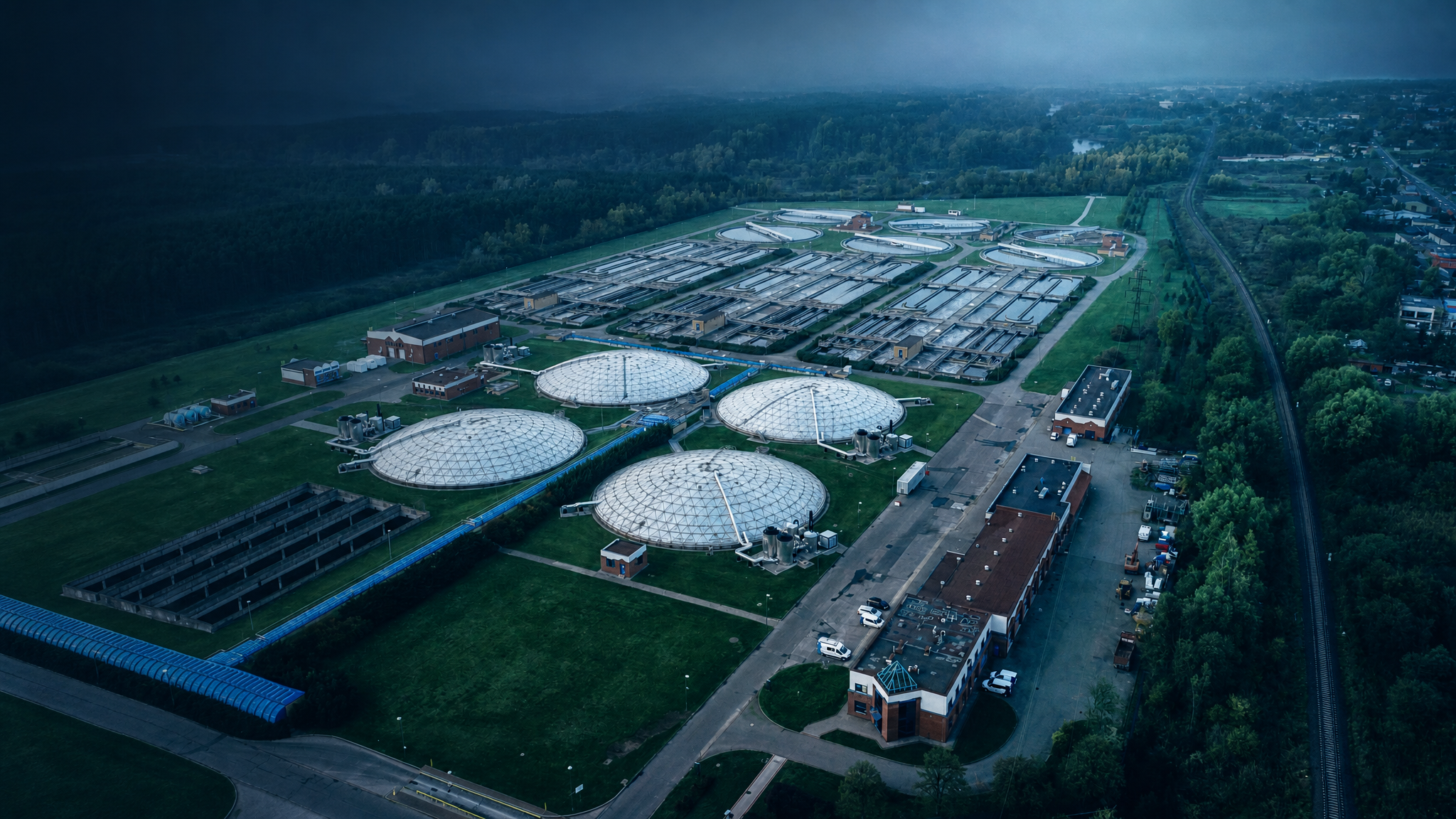
Tertiary Sewage Treatment Explained
Where the third stage fits in the sewage treatment process — and why it matters.
Tertiary sewage treatment is the third stage of treating sewage at a sewage works, after primary (physical settling) and secondary (biological) treatment. 'Sewage treatment' and 'wastewater treatment' describe the same process — 'sewage' is the more common term for municipal foul water, while 'wastewater' is the broader engineering term. The tertiary stage polishes the secondary effluent: it removes the residual nutrients (nitrogen and phosphorus), suspended solids and, where required, pathogens that biological treatment leaves behind, so the final effluent is clean enough to discharge to rivers and coastal waters or to reuse. Across the EU, the tertiary stage is moving from optional to mandatory for most larger sewage works under the revised Urban Wastewater Directive.
Key Numbers
The stages of sewage treatment
Every sewage works treats foul water in a sequence of stages, each removing what the previous one leaves behind:
- Primary treatment — screening and settlement tanks physically remove grit, rags and the heavier solids that settle out of the raw sewage.
- Secondary treatment — biological processes (activated sludge, trickling filters or biofilm reactors) break down the dissolved and fine organic matter that primary settling cannot capture.
- Tertiary treatment — a polishing stage that removes the residual nutrients, suspended solids and, where required, pathogens still present in the secondary effluent.
- Quaternary treatment — an emerging fourth stage that removes micropollutants such as pharmaceutical residues, now being added at the largest works.
The tertiary stage is where a sewage works moves from “biologically treated” to genuinely clean, discharge-ready effluent. It is also the stage most affected by the tightening EU nutrient limits, which is why so many operators are planning tertiary upgrades now.
Sewage or wastewater — the process is the same
For Existing Sewage Works
Tertiary treatment is becoming mandatory
Ready to upgrade your treatment plant?
Get a preliminary engineering assessment tailored to your plant’s specific conditions and requirements.
Frequently Asked Questions
Related Content
Last reviewed: August 2026. Regulatory requirements may vary by national implementation. This content is for informational purposes and does not constitute legal or engineering advice.