What Is the Best Tertiary Treatment for an Existing Plant?
Selecting retrofit-compatible technologies based on site-specific constraints.
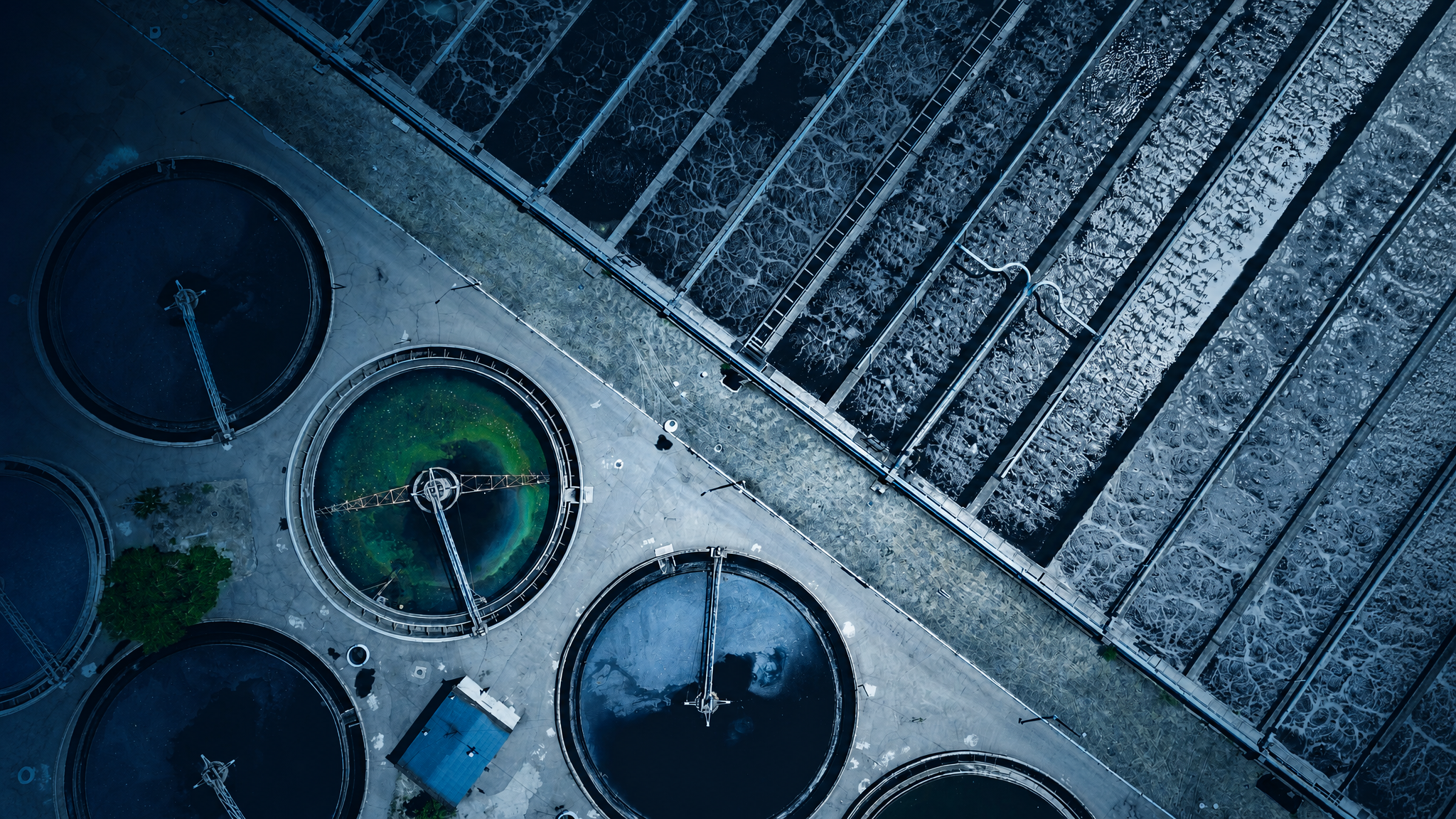
There is no universally 'best' tertiary treatment — the right answer depends on your plant's specific constraints: available footprint, hydraulic head, existing tank inventory, and operational capacity. For most European secondary plants facing the 2033–2039 compliance deadlines, compact filtration technologies (disc filters, cloth media filters) combined with chemical phosphorus precipitation offer the fastest, lowest-risk upgrade path. Plants with decommissioned tanks can often repurpose them for sand filtration or MBBR-based polishing at significantly reduced CAPEX.
Key Numbers for Retrofit Projects
Constraint Assessment Checklist
Available Footprint
"What is the unoccupied area adjacent to or within the plant boundary?"
Eliminates large-footprint options (e.g. conventional sand filters) early.
Hydraulic Profile
"What is the available gravity head between secondary clarifier and discharge?"
Determines gravity vs. pumped feed — affects OPEX by 15–30 %.
Structural Reuse
"Are there decommissioned tanks or basins that can be repurposed?"
Reusing existing civil structures can cut CAPEX by 30–50 %.
Construction Access
"Can heavy equipment reach the installation area without disrupting operation?"
Modular, containerised solutions reduce on-site construction.
Electrical Capacity
"Does the existing switchgear have spare capacity for new process loads?"
Upgrading the MCC panel is often overlooked but can add 3–6 months to a project.
Operational Staff
"How many operators are available, and what is their experience level?"
Complex technologies (membranes, chemical dosing) require more skilled operators.
Retrofit Rule of Thumb
Common Retrofit Scenarios
Compact Add-On (Disc/Cloth Filter)
highIdeal for plants with minimal spare footprint. Installed as a standalone unit downstream of secondary clarifiers. Very low civil works.
- Smallest footprint
- Fast installation (< 12 months)
- Low OPEX
- Gravity feed possible
- TSS polishing only (no biological N/P removal)
- Chemical dosing needed for TP
Repurposed Basin (Sand Filter / MBBR)
highConverts decommissioned settling tanks or unused basins into tertiary treatment. Significant CAPEX savings through civil structure reuse.
- 30–50 % CAPEX reduction
- Proven, robust technologies
- Good for biological polishing
- Dependent on suitable existing structures
- May need structural reinforcement
Modular / Containerised System
mediumPre-engineered treatment modules delivered on-site. Good for phased rollouts or plants that need to treat while they build.
- Minimal on-site construction
- Quick deployment
- Scalable
- Higher cost per m³ than fixed installations
- Limited economies of scale
Full New Build (Filter Building)
mediumNew purpose-built structure for tertiary filtration. Highest performance certainty but longest timeline and highest CAPEX.
- Maximum design flexibility
- Optimal hydraulic integration
- Long service life
- Highest CAPEX
- Longest construction (24–36 months)
- Significant footprint needed
Engineering Insight
Ready to upgrade your treatment plant?
Get a preliminary engineering assessment tailored to your plant’s specific conditions and requirements.
Frequently Asked Questions
Related Content
Last reviewed: August 2026. Regulatory requirements may vary by national implementation. This content is for informational purposes and does not constitute legal or engineering advice.