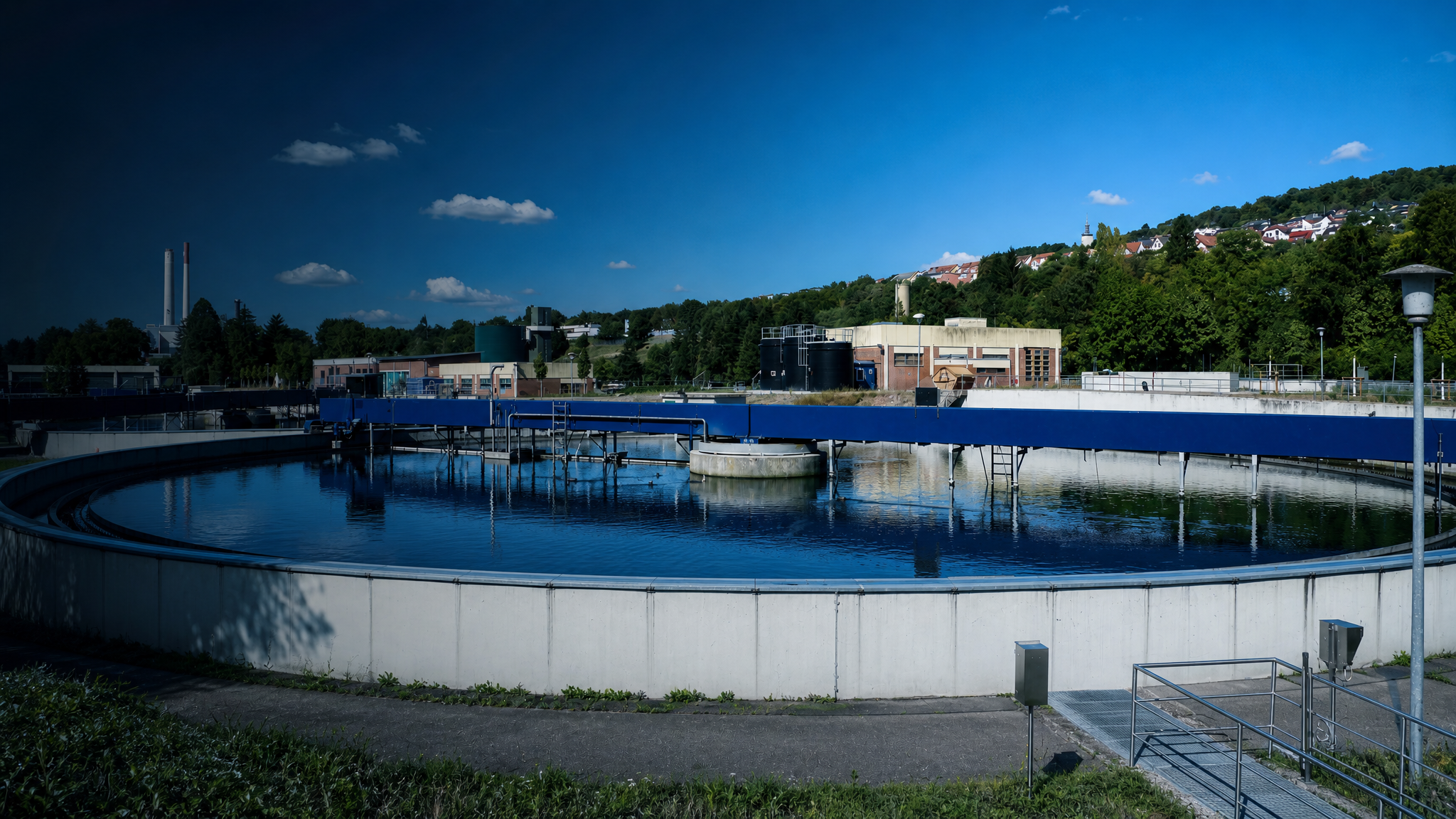
Low Discharge Quality – Root Causes & Solutions
Why effluent limits are missed and how to fix it systematically.
Poor discharge quality is rarely caused by a single factor. It typically results from a combination of hydraulic overload during storm events, insufficient biological treatment capacity, aging or undersized clarifiers, and missing tertiary treatment stages. The revised EU Directive tightens limits for nitrogen, phosphorus, and suspended solids simultaneously — meaning plants that marginally comply today will likely fail tomorrow. A systematic diagnosis covering hydraulic capacity, biology performance, and solids separation is the first step toward a lasting solution.
Key Numbers
Common Root Causes
Hydraulic Overload
Storm flows exceed clarifier and biological capacity. Peak-flow bypasses send untreated or partially treated wastewater directly to the receiving water.
- Surface loading exceeds 1.5 m/h during storm events
- Short-circuiting reduces effective retention time
- Washout of biomass during peak events
- Solution: equalization basins, storm tanks, or high-rate treatment
Insufficient Biological Capacity
The activated sludge system is too small for the actual organic and nitrogen load, resulting in incomplete nitrification and poor COD removal.
- Sludge age below 10 days prevents stable nitrification
- Aeration capacity insufficient for peak loads
- Limited anoxic volume for denitrification
- Solution: MBBR carriers, sidestream treatment, or basin expansion
Poor Solids Separation
Final clarifiers or filters do not achieve the required TSS levels, causing particulate phosphorus and organic nitrogen to escape in the effluent.
- Sludge settling problems (SVI > 150 mL/g)
- Clarifier scraper or weir defects
- No tertiary filtration installed
- Solution: filtration retrofit, clarifier rehabilitation, or sludge conditioning
Missing Chemical Treatment
Without chemical phosphorus precipitation, even well-performing biological treatment rarely achieves TP below 1.5 mg/L consistently.
- No dosing point for iron or aluminum salts
- Under-dosing due to manual control or outdated settings
- Dosing after secondary clarifier without downstream filtration
- Solution: automated dosing with P-analyzer feedback and tertiary filter
Diagnostic Approach
A Systematic Path to Compliance
Step 1 — Optimize What You Have
Adjust sludge age, aeration control, and return sludge rates. Install online sensors (NH4, NO3, PO4) for real-time process control. Often 20–30% improvement is achievable without construction.
Step 2 — Add Chemical P-Removal
Install or upgrade chemical dosing (FeCl₃, PAC, or Al₂(SO₄)₃) with automated control. Target simultaneous precipitation in the biology plus post-precipitation before filtration.
Step 3 — Install Tertiary Treatment
Add disc filtration, cloth media filtration, or deep-bed sand filtration as a final polishing step. This removes residual TSS to below 10 mg/L and captures particulate-bound phosphorus for reliable compliance.
Step 4 — Monitor & Verify
Commission a 6-month verification programme with 24h composite sampling. Confirm compliance margins under dry and wet weather conditions before reporting to regulators.
When to Act
Tightening EU Discharge Standards
Ready to upgrade your treatment plant?
Get a preliminary engineering assessment tailored to your plant’s specific conditions and requirements.
Frequently Asked Questions
Related Content
Nitrogen Removal
Meeting TN discharge limits
Phosphorus Removal
Achieving ultra-low TP
TSS / Filtration
Tertiary solids removal
Retrofit Solutions
Upgrading existing plants
Treatment Technologies
Technology comparison
EU Requirements
Full regulatory overview
Compliance Deadlines
When do you need to comply?
Engineering Assessment
Free plant assessment tool
Last reviewed: August 2026. Regulatory requirements may vary by national implementation. This content is for informational purposes and does not constitute legal or engineering advice.