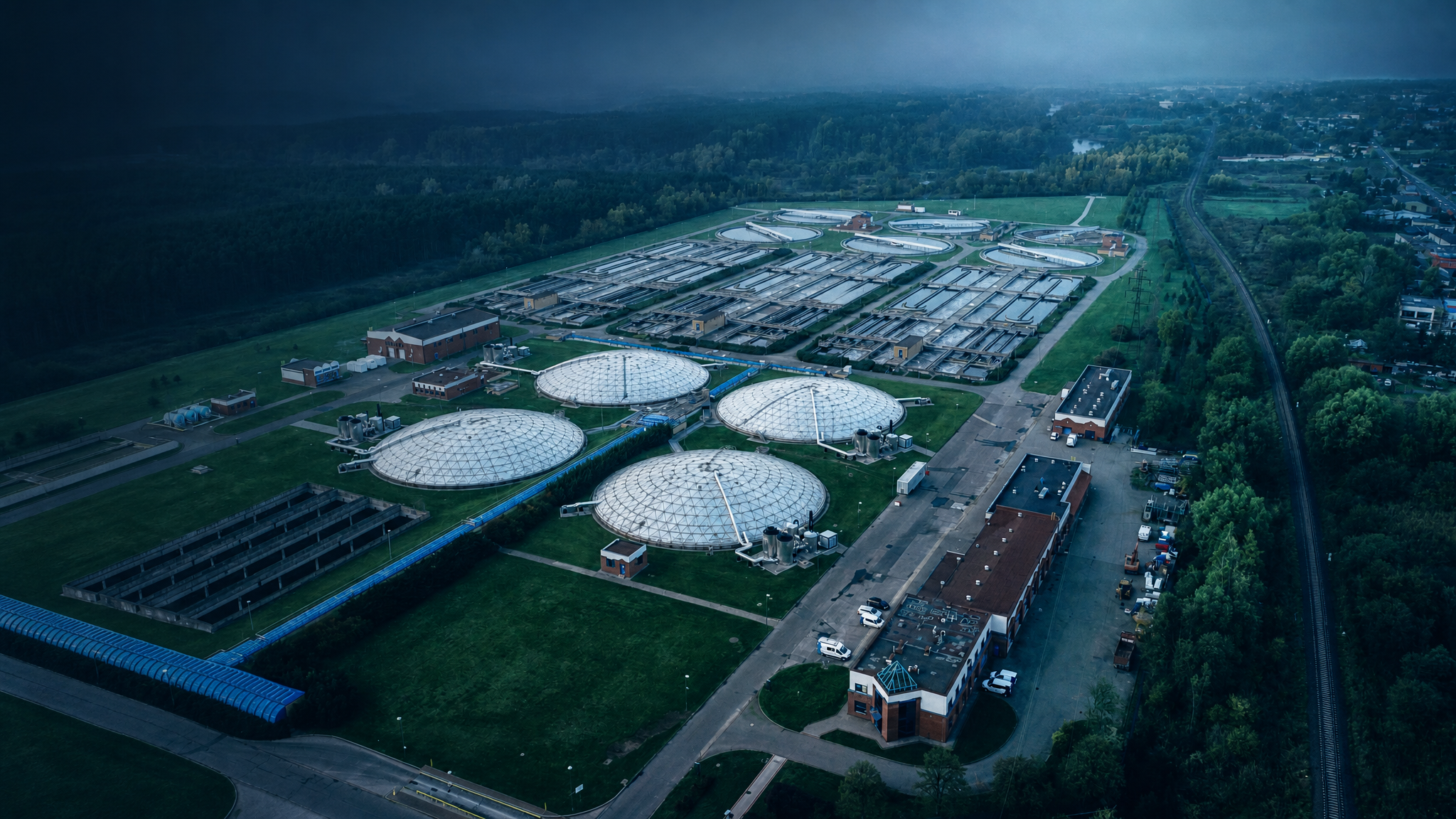
Combining Capacity Upgrade with Tertiary Treatment
Why upgrading capacity and adding tertiary treatment in one project saves time, money, and footprint.
Many plants facing the 2033–2039 compliance deadlines also need capacity expansion to serve growing populations or manage increasing wet-weather flows. Combining both upgrades in a single project is almost always more cost-effective than sequential retrofits: shared civil works save 20–30 % on construction, integrated hydraulic design avoids unnecessary pumping, and the expanded biological stage often frees decommissioned tanks that can house tertiary treatment at zero additional footprint. The biggest risk is scope creep — keep the combined project structured as two clear work packages within one contract.
Key Numbers
Synergies of Combined Upgrades
Shared Civil Works
Combining capacity expansion and tertiary addition in one project reduces mobilisation costs, temporary works, and overall construction duration by 20–30 %.
→ 20–30 % construction cost saving
Integrated Hydraulic Design
Designing the hydraulic profile holistically (new secondary + tertiary in one pass) avoids the need for intermediate pumping stations that a later bolt-on would require.
→ Eliminates retrofit pumping costs
Single Procurement Package
Bundling the upgrade into one contract gives economies of scale for equipment, instrumentation, and installation. It also avoids double mobilisation of contractors.
→ Lower CAPEX per unit capacity
Phased Biological + Tertiary Upgrade
Expanding the biological stage in phase 1 frees up decommissioned tanks that become the shell for tertiary treatment in phase 2 — zero additional footprint for tertiary.
→ Zero net new footprint for tertiary
Engineering Insight: Design Now, Build Later
For Plant Operators
Ready to upgrade your treatment plant?
Get a preliminary engineering assessment tailored to your plant’s specific conditions and requirements.
Frequently Asked Questions
Related Content
Last reviewed: August 2026. Regulatory requirements may vary by national implementation. This content is for informational purposes and does not constitute legal or engineering advice.