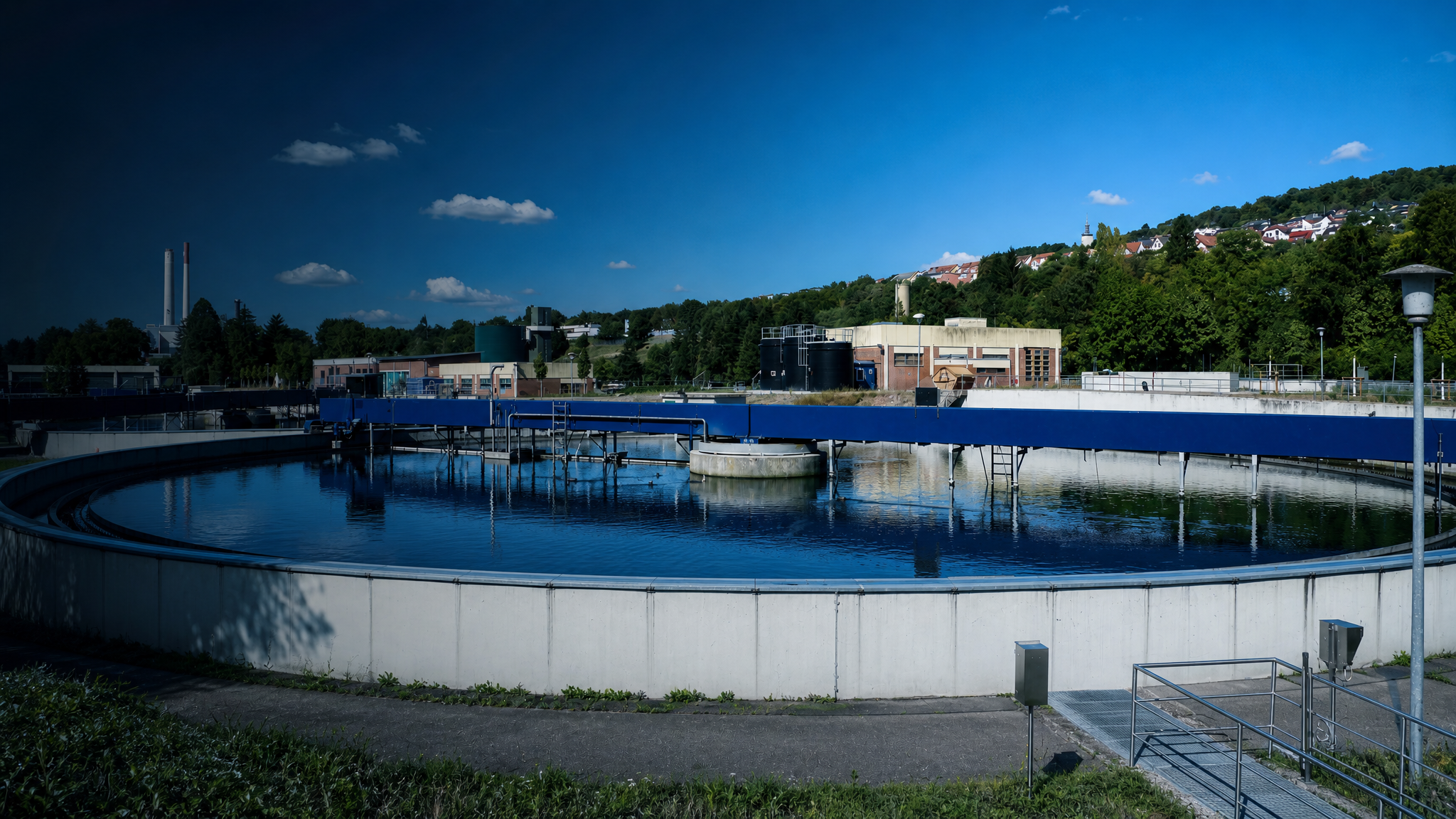
Hydraulic Integration of Tertiary Treatment
How available head, flow patterns, and pipe routing determine your tertiary treatment design.
The hydraulic profile — the vertical distance between the secondary clarifier overflow and the discharge point — is the single most important factor in tertiary treatment design for existing plants. A gravity-fed system (typically needing 0.5–1.5 m of available head) eliminates pumping energy entirely, which can save 15–30 % of tertiary treatment OPEX over the plant’s lifetime. When sufficient head is not available, low-head filter designs and optimised weir configurations can often recover the missing centimetres. Pumped feed is the fallback, not the default.
Key Numbers
Hydraulic Scenarios
Available head 0.8–1.5 m
Gravity-fed disc/cloth filter
Available head 0.3–0.8 m
Low-head disc filter + optimised weir
Available head < 0.3 m
Pumped feed to filter + gravity return
Tertiary below secondary clarifier level
Pump station required; design for peak flow
Long distance between secondary and discharge
Intermediate pump + gravity pipe or pressure main
Engineering Insight: The Hydraulic Survey
For Existing Plants
Ready to upgrade your treatment plant?
Get a preliminary engineering assessment tailored to your plant’s specific conditions and requirements.
Frequently Asked Questions
Related Content
Last reviewed: August 2026. Regulatory requirements may vary by national implementation. This content is for informational purposes and does not constitute legal or engineering advice.